
Aug 2, 2024
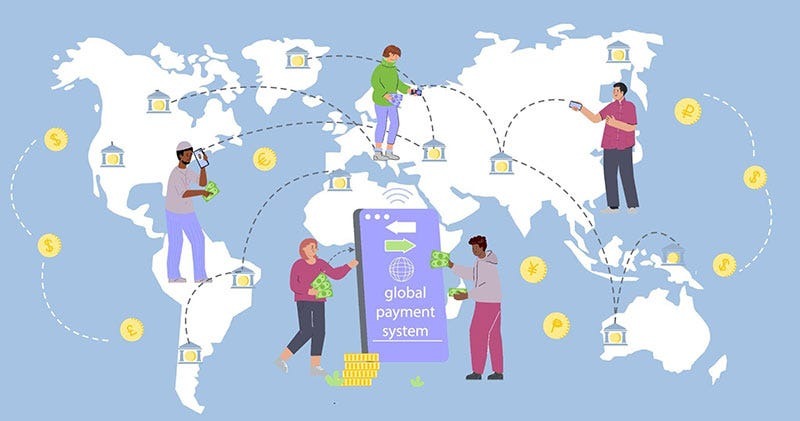
Overview of Int’l Payment
International payment systems are the backbone of global trade, facilitating the transfer of money across borders. These systems encompass a complex network of payment systems, banks, financial institutions, and regulatory bodies working together to facilitate the smooth movement of funds. The landscape of international payment systems is rapidly evolving with a larger competitive base, driven by fintech innovations like Revolut, Wise, PayPal, blockchain technologies, and various regulatory advancements.
The global volume of cross-border payments was approximately $156 trillion in 2022, with projections to reach $250 trillion by 2027 with a CAGR of ~9.9%. This growth is fueled by the expansion of e-commerce, integration of advanced payment technologies, the increasing prevalence of digital currencies, and greater economic interconnectedness.
International Payment Systems in India
India's international payment landscape has evolved dramatically in recent years, driven by technological advancements, regulatory reforms, and increasing global trade. With a focus on efficiency, transparency, and security, India's payment systems are crucial for its economic integration into the global market.
India's domestic payment system has undergone a revolution with the Unified Payments Interface (UPI). Launched by the National Payments Corporation of India (NPCI) in 2016, UPI has processed over 13.89 billion transactions as at June 2024. This system's simplicity, speed, and low cost have made it immensely popular. Efforts are now underway to expand UPI's reach internationally. Notably, partnerships with countries like Singapore and the UAE are facilitating seamless cross-border transactions, allowing Indians abroad to send money home quickly and cost-effectively. In June 2024 alone, UPI registered over 10 billion transactions, with a value exceeding INR 15 trillion, highlighting its growing dominance.
The Liberalized Remittance Scheme (LRS) is another critical component of India's international payment ecosystem. The LRS permits Indian residents to remit up to USD 250,000 per financial year for various purposes, including education, travel, and investment. This scheme has significantly increased international financial activity, with remittances under LRS exceeding USD 19 billion in 2022. This surge reflects the growing confidence and participation of Indian residents in the global financial landscape. In 2023, the RBI reported that the LRS saw an increase of over 25% in outward remittances compared to the previous year, indicating a robust engagement with international financial markets.
Indian banks' adoption of the SWIFT Global Payments Innovation service has further enhanced the efficiency of international trade payments. SWIFT improves the speed, transparency, and traceability of cross-border transactions, reducing the time taken for payments from several days to just a few hours. This service enables end-to-end tracking of transactions, providing greater visibility and control for businesses and individuals engaged in international commerce.
The Reserve Bank of India (RBI) plays a pivotal role in regulating and facilitating international payments. It ensures compliance with international standards and promotes innovation within the payment ecosystem. The Foreign Exchange Management Act (FEMA) governs foreign exchange transactions in India, including international payments. FEMA aims to facilitate external trade and payments while maintaining the stability of the forex market. The Bharat Bill Payment System (BBPS), initially designed for domestic bill payments, is being expanded to enable cross-border bill payments. This expansion will allow non-resident Indians (NRIs) to pay utility bills in India from abroad, simplifying their financial interactions with the country. The BBPS processed over 2 billion transactions in 2023, and its expansion to international payments is expected to significantly ease the financial operations for NRIs.
The RBI's Vision 2021-2024 document outlines plans to enhance the payment ecosystem, including promoting digital payments and integrating innovative technologies. This vision includes expanding UPI internationally and fostering the use of blockchain for secure and efficient cross-border transactions. One of the most significant initiatives in this direction is the exploration of a Central Bank Digital Currency (CBDC), known as the digital rupee. As of 2023, pilot projects for the digital rupee are underway, focusing on both retail and wholesale transactions. The successful implementation of a digital rupee could revolutionize the international payment landscape by providing a secure and efficient medium for cross-border transactions, potentially reducing transaction costs and enhancing the speed of international payments. India's efforts to internationalize the rupee are gaining momentum, with partnerships for rupee trade settlements with countries like the UAE, Russia, Malaysia, Nepal, Sri Lanka, and Iran, aiming to strengthen its position in the global financial system. The digital rupee pilot has shown promising results, with transactions worth over INR 500 billion conducted in its initial phase, indicating a significant shift towards digital currency adoption.
Despite these advancements, challenges persist in India's international payment system as navigating the complex regulatory environment for international payments can be particularly challenging for small and medium-sized enterprises (SMEs). Compliance with anti-money laundering (AML) and counter-terrorism financing (CTF) regulations is crucial but can be cumbersome. Additionally, fluctuations in the Indian Rupee (INR) affect the cost and predictability of international payments, posing a risk for businesses engaged in cross-border trade. Infrastructural gaps, particularly in technological integration, also hinder the seamless execution of international payments, with interoperability between different payment systems remaining a key challenge.
Bridging Gaps: How Mobile Money and Fintech Are Shaping Africa’s Payment Systems
Africa's international payment systems are experiencing a transformative shift, largely driven by technological advancements and the push for greater financial inclusion. At the heart of this revolution is mobile money, with M-Pesa in Kenya standing out as a groundbreaking example. Launched in 2007, M-Pesa has profoundly impacted the financial landscape, reaching over 50 million users across several countries. According to GSMA data, mobile money accounts in Africa now total approximately 500 million, facilitating transactions worth over $1 trillion each year. This widespread adoption underscores mobile money’s critical role in bridging the gaps left by traditional banking.
The continent's fintech sector is also burgeoning, with innovative startups like Flutterwave and Chipper Cash leading the charge. Flutterwave, which began operations in 2016, has become a major player, providing payment solutions for over 400,000 businesses in more than 30 countries. Its impressive growth was marked by a $3 billion valuation in 2023. Meanwhile, Chipper Cash, founded in 2018, has expanded its services to include cryptocurrency trading and secured $100 million in funding in 2021. These companies are reshaping how payments are handled across borders.
Despite these advancements, Africa's regulatory landscape presents challenges. Regulations vary significantly from one country to another, impacting how international payments are processed. For instance, Nigeria’s Central Bank has imposed foreign exchange controls that can complicate transactions, while South Africa’s more streamlined approach offers a clearer path for payment solutions.
Cross-border trade is a significant driver of the demand for international payment systems in Africa. The African Continental Free Trade Area (AfCFTA), which commenced in 2021, aims to boost intra-African trade by creating a unified market. This increased trade activity is driving the need for more efficient payment solutions. The Pan-African Payment and Settlement System (PAPSS), launched in 2022, represents a major step in this direction. By facilitating transactions in local currencies and reducing dependence on global systems, PAPSS aims to lower transaction costs and enhance financial integration.
Financial inclusion has seen remarkable progress in recent years. The World Bank reports that access to financial services in Sub-Saharan Africa has risen from 42% in 2011 to around 66% today. Mobile money has been instrumental in this increase, and the economic benefits are substantial. Projections suggest that further financial inclusion could add an impressive $3.7 trillion to Africa’s GDP by 2030.
Looking ahead, emerging technologies such as blockchain and cryptocurrencies are poised to play a significant role. Countries across the continent are exploring digital currencies and leveraging blockchain to enhance transparency and efficiency in payments. Additionally, the growth of e-commerce is expected to drive further demand for seamless payment solutions, with transaction volumes projected to reach $75 billion by 2025.
Get to Know the Regions:
- Rwanda
Rwanda, known as the "Land of a Thousand Hills," demonstrates economic dynamism and resilience, making it an attractive destination for investors. Agriculture employs 70% of the population and contributes 33% to GDP, with high-quality coffee, tea, and pyrethrum as major exports. The mining sector is also crucial, with Rwanda being a leading producer of tantalum, tin, and tungsten.
Tourism thrives in Rwanda with its rich natural attractions like mountain gorillas in Volcanoes National Park, Nyungwe Forest, and Lake Kivu, boosting its GDP. Rwanda’s focus on Innovation and technology have spurred the rise of tech hubs and startups, making Rwanda a model for modern development in Africa. Investments in hydroelectric and solar power are ensuring sustainable growth, wth its infrastructural development helping to enhance trade within the East African Community.
- Maharashtra
Maharashtra is a prominent state in western India, known for being an economic powerhouse in the nation’s growth. The capital, Mumbai, is India’s epicenter of financial and economic activities, hosting the Reserve Bank of India (RBI), Bombay Stock Exchange (BSE), and numerous banks and financial institutions. The state has a diverse economy with strengths in finance, manufacturing, agriculture, and technology.
Mumbai is a global financial hub, while Pune (a major city) excels in IT, fintech, with top educational institutions like IIT Bombay and Tata Institute of Fundamental Research (TIFR). Maharashtra is a major producer of sugarcane, cotton, and fruits. Its robust infrastructure, including Jawaharlal Nehru Port Trust (JNPT) and modern transport, supports cross-border trade attracting foreign investment. The state's rich culture includes historic sites like Ajanta and Ellora Caves, vibrant festivals like Ganesh Chaturthi, and attractions such as Mumbai’s coast and Western Ghats, drawing global tourists and boosting local economies.
Opportunity Highlights
- Applications are now open for Kestone’s Go-to-Market (GTM) Program
Applications are now open for the Kestone GTM Program, which supports businesses across diverse industries in launching their products or services through comprehensive market research, strategic planning, campaign management and execution support. The fully-funded program spans several months and includes performance tracking. Apply here by 15th September 2024
- Applications are now open for the Startup Wise Guys PropTech Accelerator Program
The Startup Wise Guys PropTech Accelerator is accepting applications for its next cohort, aimed at early-stage PropTech startups. The fully-funded program offers mentorship, training, and networking opportunities, plus funding support. Key stages include product and business development and investor pitching. Apply here by 31st October, 2024.
Business Spotlight
- Flutterwave: Flutterwave, a Nigerian fintech company, is revolutionizing international payments with its seamless cross-border solutions across Africa and beyond. It offers a comprehensive platform for businesses to handle payments in multiple currencies, featuring a versatile gateway, multi-currency support, and integrations with major global networks. Flutterwave aims to simplify global transactions, enhance international business operations, and drive economic growth through innovative financial technology.
- Paytm: Paytm is an Indian fintech giant transforming digital payments with its broad range of services, including payments, banking, and insurance. Through strategic partnerships and advanced technology, Paytm facilitates international payments, by supporting multiple payment methods and currencies. Paytm’s goal is to improve financial accessibility and convenience, driving global commerce through its extensive user base and innovative technology.
Did you know?
- Did you know that Madagascar, an island nation off the southeastern coast of Africa, hosts about 5% of the world's endemic plant and animal species, many of which exist nowhere else on the planet?
- Did you know that Indian Railways is one of the largest employers in the world, with over 1.3 million employees? As of 2023, it manages the fourth-largest national railway system globally, with a track length of 132,310 km (82,210 mi), and operates more than 20,000 passenger trains daily.
Don’t forget to:
- Share your story: Are you an entrepreneur with an important milestone or innovation to share? Reply to this newsletter, and we might feature your story in the newsletter or on our social media.
- Spread the Word: Did you enjoy this newsletter and know others who would too? Forward this issue via email or share it on social media. If you've been forwarded this newsletter, subscribe here.