
Aug 16, 2024
India’s Manufacturing Landscape: A Deep Dive into Growth and Challenges
India’s manufacturing sector is experiencing notable growth, contributing ~17% to its GDP while creating employment for over 50 million people, thus making it a vital contributor to its economic landscape. Manufacturing output has surged, growing by 6% year-over-year, surpassing the global average of 3.5%. This growth is driven by rising domestic demand, strategic government policies, and substantial foreign direct investment (FDI). In 2023, India attracted around $92 billion in FDI, with significant inflows into manufacturing, particularly the electronics sector, which saw over $12 billion in investments.
The automotive industry remains a key segment with over 4.5 million vehicles being produced in India with major manufacturers like Tata Motors, Mahindra & Mahindra, and Maruti Suzuki leading production and exports with its exports reaching $18 billion in 2023. Similarly, the textiles and garments industry remains vital being one of the world’s largest producers and exporters of textiles and garments. In 2023, the sector’s export value stood at $42 billion, underscoring its importance in global trade with an employment of ~47 million people.
The pharmaceutical industry is another key player in India’s manufacturing landscape. The pharmaceutical exports amounted to $52 billion in 2023, reinforcing its position as a leading global supplier of generic medicines with Sun Pharmaceutical Industries and Dr. Reddy’s Laboratories, with continuous global expansion leading to its international recognition.
The "Make in India" initiative, launched in 2014, continues to play a crucial role in fostering a favorable environment for manufacturing investments. In 2023, the initiative contributed to the development of key industrial corridors, such as the Delhi-Mumbai Industrial Corridor (DMIC) and the Chennai-Bangalore Industrial Corridor, enhancing connectivity and supporting manufacturing growth.
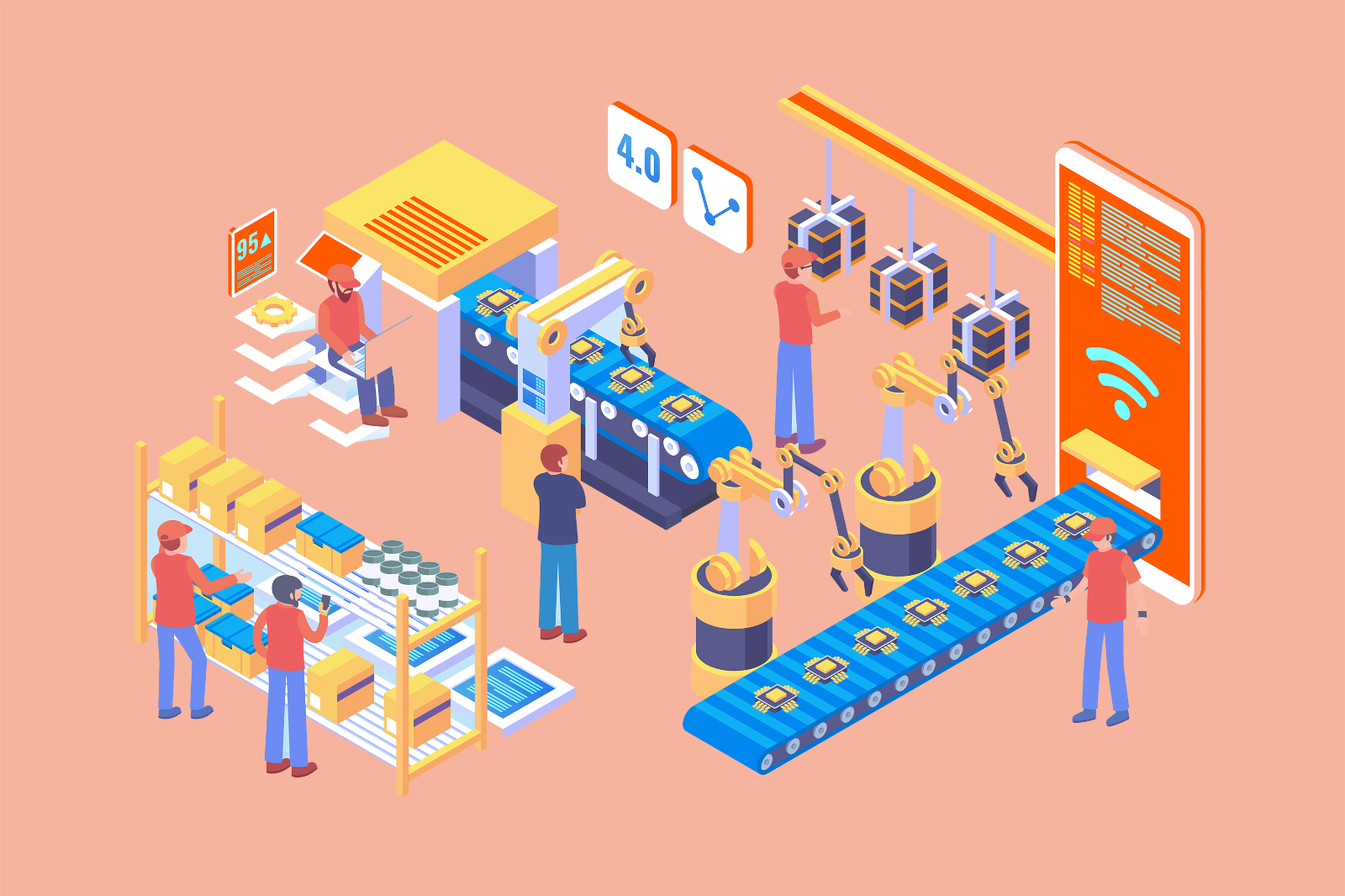
Technological advancement such as the integration of Industry 4.0 technologies is transforming manufacturers with investments in advancement technologies reaching $5 billion in 2023. Governmental initiatives like ‘’Digital India’’ and smart manufacturing hubs are also enhancing efficiency in production processes.
However, challenges persist as Infrastructure remains a significant barrier with inadequate transportation and logistics networks, impacting supply chain efficiency. The World Bank estimates that improving infrastructure could significantly boost competitiveness and the government seeks to invest $1.5 trillion in infrastructure over the next five years to address these gaps. Skills gap remains a budding concern, as ~55% of manufacturing firms are struggling to find skilled labor. Hence the Skill India initiative aims to address this through vocational training and educational alignment.
Looking ahead, India’s manufacturing sector is expected to continue its upward trajectory. By 2030, the industry is projected to contribute around 25% to India’s GDP and create millions of new jobs. The focus on sustainable practices, technological advancements, and infrastructure improvements will be key drivers of this growth. The government’s ongoing investments in infrastructure and skills development, combined with strategic policy support, will be crucial in realizing the sector’s full potential.
Africa's Manufacturing Boom: Insights and Trends
Africa's manufacturing sector is evolving rapidly, establishing itself as a significant player in the global economy. In 2023, manufacturing contributed about 10% to Africa's GDP which is a modest figure compared to East Asia’s 30%, although indicative of substantial progress. The sector employs ~52 million people, with key contributors being South Africa, Egypt, Nigeria, and Morocco, which collectively account for over half of Africa’s manufacturing output.
Between 2010 and 2020, the continent's manufacturing output increased by an average of 3.5% annually, exceeding the global average of 2.5%. The African Development Bank (AfDB) projects that Africa’s manufacturing sector could reach $1 trillion by 2030. The growth is driven by rising domestic demand, improving infrastructure, and increasing foreign direct investment (FDI). In 2022, Africa attracted $83 billion in FDI, a 4% increase from the previous year, with notable investments in automotive, consumer goods, textiles, and pharmaceuticals. Countries like Ethiopia and Rwanda have benefited from favorable policies and infrastructure improvements, leading to significant FDI growth.
South Africa stands out as a manufacturing powerhouse on the continent, with the sector contributing ~13% to the country's GDP. Its automotive industry is particularly prominent, producing over 600,000 vehicles in 2022 and making South Africa the continent’s largest automotive producer. Manufacturing exports from South Africa reached $95 billion in 2022, mainly from vehicles and machinery. Egypt’s manufacturing sector, contributing 16% to its GDP, is notable for its textile industry, which employs over 1.5 million people and generated $30 billion in exports in 2022.
Nigeria’s manufacturing sector contributes 8.7% to its GDP, with a heavy concentration in food and beverages, cement, and chemicals. It grew by 4.3% in 2022, largely driven by the rising consumer goods and construction material demands. Morocco has carved out a niche in automotive manufacturing with the sector accounting for ~23% of the nation’s GDP, producing 535,825 vehicles in 2023 and achieving $35 billion in manufacturing exports.
The continent’s demographic profile presents a significant opportunity. Africa’s population, expected to reach 2.5 billion by 2050 with over 60% under 25, offers a labor pool for labor-intensive industries like textiles and electronics. The African Continental Free Trade Area (AfCFTA), which became operational in January 2021, offers a significant boost to intra-African trade by over 50% by 2030, creating new opportunities for manufacturers. Digital transformation is another critical opportunity for Africa's manufacturing sector, including the adoption of Industry 4.0 technologies, such as IoT, artificial intelligence (AI), and robotics to significantly enhance productivity and efficiency. The digital economy in Africa is projected to reach $180 billion by 2025, offering further growth potential.
Despite these opportunities, Africa’s manufacturing sector faces significant challenges, with infrastructural deficit being a major barrier with transportation costs being 50% to 175% higher than other regions, thus impacting the competitiveness within global markets. Energy access is another critical challenge with a large percentage in Africa still lacking access to electricity, and power outages costing 1% to 2% of GDP annually.
Additionally, the skills gap is a significant barrier. Many countries face mismatches between available skills and industry needs. Technical and vocational education and training (TVET) programs are essential for bridging this gap. Governments are also developing industrial policies and Special Economic Zones (SEZs) to attract investment and boost exports. By 2030, Africa’s manufacturing sector is expected to contribute 15% to GDP and create up to 20 million new jobs, with Ethiopia, Kenya, and Ghana emerging as key manufacturing hubs.
Get to Know the Regions:
- Ethiopia
Ethiopia, located in East Africa is a landlocked country within the Horn of Africa. The country is known for its rich history and culture, serving as one of the oldest civilizations and the only African country that wasn't colonized. The economy heavily relies on agriculture, with coffee being the major export. However, the country is rapidly diversifying through significant infrastructure projects, including industrial parks and energy initiatives, which are significantly boosting manufacturing and exports. Addis Ababa is the nation’s capital and serves as a key political and economic center in East Africa, driving the country's modernization and growth. Ethiopia is home to over 80 ethnic groups, with various historical landmarks such as Lalibela’s rock-hewn churches and Aksum’s ancient obelisks, which attract millions of tourists annually.
- Gujarat
Gujarat is a vibrant state located on the western coast of India, known for its rich cultural heritage and economic dynamism. The state’s economy is diverse, driven by key industries such as textiles, chemicals, and engineering, with major ports like Kandla and Mundra ports which are boosting trade. The state’s capital, Gandhinagar, and its major cities like Ahmedabad and Surat are key economic and industrial hubs. Gujarat is renowned for its historical sites, including the Gir National Park, home to Asiatic lions, and the historic city of Ahmedabad which is a UNESCO World Heritage site. Gujarat’s diverse culture is reflected in its festivals, cuisine, and traditional crafts, attracting tourists and investors alike.
Opportunity Highlights
1- IABN Online Event on Affordable Healthcare

With global healthcare spending at $10.5 trillion in 2023 and a significant disparity—$5,000 per capita in high-income versus $41 in low-income countries—there’s a pressing need for innovative solutions. The India Africa Business Network (IABN) is hosting an online event on August 22, 2024, to explore potential partnerships in healthcare between India and Africa, focusing on medical devices distribution and telehealth within the affordable healthcare space. Register to attend here.
2- Applications are now open for SAIS Investment Readiness Programme (IRP)
Are you leading a startup making a positive impact on agriculture, food & nutrition, livestock, or climate in Africa? 🌍 Apply now for the SAIS Investment Readiness Programme 2025! This one-year program, managed by GIZ, offers tailored coaching, technical assistance, and peer-to-peer learning with crucial fundraising support and exposure to investors, helping startups scale their solutions and enhance their impact. Apply here.
Business Spotlight
- Ola Electric: Ola Electric, an Indian electric vehicle startup, is revolutionizing urban mobility with its high-performance electric scooters. The company is also developing an extensive charging network and advanced battery technology to support sustainable transportation. Ola Electric aims to reduce carbon emissions and drive India towards a cleaner, more efficient future in urban mobility.
- FabLab Winam: FabLab Winam, based in Kisumu, Kenya, is empowering local innovators with access to cutting-edge digital fabrication tools like 3D printers and CNC machines. By offering training and resources, the lab supports the creation of marketable products, driving technological advancement and entrepreneurship. FabLab Winam plays a crucial role in fostering innovation and supporting Kenya’s growing tech ecosystem.
Don’t forget to:
- Share your story: Are you an entrepreneur with an important milestone or innovation to share? Reply to this newsletter, and we might feature your story in the newsletter or on our social media.
- Spread the Word: Did you enjoy this newsletter and know others who would too? Forward this issue via email or share it on social media. If you've been forwarded this newsletter, subscribe here.