
Jun 26, 2024
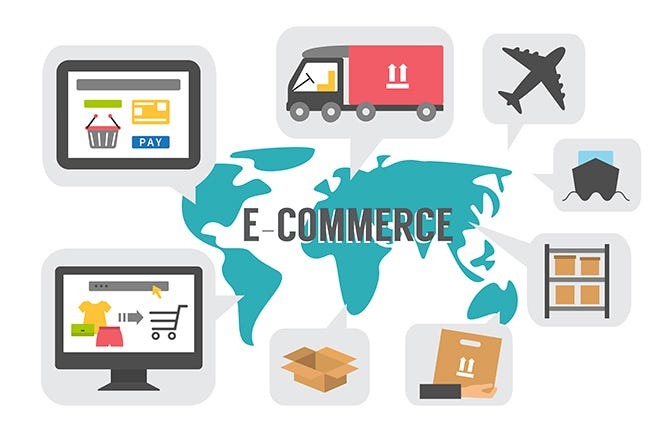
International e-commerce is revolutionizing the global retail landscape, offering unprecedented market access and innovative ways for businesses to interact with their consumers.
The global e-commerce market is expected to reach $6.3 trillion by 2024, driven by increased internet penetration, mobile usage, and consumer preference for online shopping.
Key players like Amazon, Alibaba, and eBay dominate the market with vast logistics networks and a wide range of products.
Within the e-commerce space, cross-border e-commerce is the fastest growing segment with a five-year CAGR of 27%, reaching $4.8 billion by 2026.
Driving E-Commerce Growth with Social Commerce
Companies like TEMU and Shein exemplify this transformation by integrating social media platforms, advanced logistics and cost-efficient production to reach global markets.
Shein leverages social platforms to monitor trends and quickly respond with products. Using the LATR (large-scale automated test and re-order) model to maintain optimal performance and strong user engagement, Shein integrates with thousands of small factories in China for rapid and cost-effective production.
TEMU uses advanced logistics and cross-border shipping strategies, including tax exemptions and direct delivery from overseas warehouses, to offer low-cost products. These companies leverage social media for consumer engagement, driving demands and managing efficient global supply chains.
E-commerce Insights in India and Africa
India's e-commerce sector, valued at $60 billion in 2023, is projected to reach $300 billion by 2030 (CAGR of ≈27%). With over 821 million internet users in 2023, expected to hit 900 million by 2025, India’s e-commerce growth is bolstered by smartphone adoption and 5G technology rollout. Major players include Flipkart, Amazon India, and JioMart. The widespread use of UPI and Digital India initiative has also boosted online transactions, with UPI transactions reaching 117.6 billion in 2023, demonstrating a 76% increase in digital payment as opposed to previous year.
With continuous technological advancements, rising consumer acceptance, social commerce, B2B e-commerce, and digital payment options, India's e-commerce is expected to grow significantly. By 2032, the retail market is expected to reach $2 trillion, while the digital sector is projected to reach $1 trillion by 2030.
Retail penetration is expected to reach 10.7% by 2024, with the market projected to grow from $690 billion in 2021 to $2 trillion by 2032. By 2030, India’s digital sector could hit $1 trillion, with 900 million users by 2025, making e-commerce a key economic driver.
Similarly, Africa’s e-commerce is experiencing robust growth due to increased internet penetration, mobile usage, and digital payment services. By 2025, Africa is expected to have half a billion e-commerce users, adding $180 billion to the continent's GDP. The market size is $49.02 billion in 2023, growing at a CAGR of nearly 14%. The proliferation of affordable smartphones and better internet infrastructure has boosted e-commerce, with 69% of global mobile web traffic coming from the continent.
By 2025, 61% of mobile connections will be on smartphones, widening access to online shopping platforms. Mobile money platforms like M-Pesa in Kenya are enhancing digital transactions, especially in areas with limited banking infrastructure. Major players include Jumia, Takealot, and Konga, with North African countries like Egypt and Morocco leading in e-commerce adoption while Nigeria, Kenya, and South Africa are at the forefront of e-commerce growth in Sub-Saharan Africa.
Ninety per cent of transactions are still made using cash, despite the increasing usage of digital financial services, with mobile money helping to fuel the expansion of e-commerce. This demonstrates the enormous potential for digital payment systems. The Pan African Payment Settlement System (PAPSS), which addresses high transaction costs and KYC rules that continue to be obstacles to the spread of e-commerce throughout the continent, is essential for simplifying cross-border payments and cutting costs.
Insights with Sahil Affriya:

We spoke with Sahil Affriya, founder and CEO of Shiprazor, a last-mile logistics aggregator in South Africa and Kenya and bridges trade between India and Africa. Shiprazor provides import clearance, export handling, warehousing, and logistics solutions for e-commerce.
Sahil emphasized the role of technology in cross-border e-commerce. Technologies such as tracking systems for parcel visibility, cost calculation tools, and seamless operational digital solutions are vital for competitiveness, with global e-commerce projected to reach $48 trillion by 2030.
Understanding cultural differences in international markets operations is crucial, despite products being universal. E-commerce success relies on product digitization, secure payments, and efficient delivery logistics. South Africa's e-commerce market valued at $6.5 billion and the largest on the continent, shows high growth potential due to strong consumer adoption of online shopping. Adapting to regional differences enhances market penetration and customer satisfaction.
Discussing e-commerce growth, Sahil noted rapid market expansion locally and globally. India's goal of $1 trillion in exports by 2030, with a 12.2% CAGR, highlights the importance of cross-border e-commerce. In 2021, Africa’s exports were $556.7 billion, and imports $621.9 billion, showing e-commerce potential in facilitating better trade balance and economic growth through market access that drives exports.
Partnerships are the cornerstone for managing the complexities in cross-border trade operations. Shiprazor, Shiprocket X, Indiamart collaborates with partners like Uber, Aramex, and DHL to improve supply chain efficiency. Expanding these collaborations to the economic level of countries can further leverage market expansion and cost reduction opportunities.
SMEs aiming to expand their reach and improve margins by tapping into international markets can leverage enabling platforms like Shiprazor and Distacart, which allow exports to a global market. By capitalizing on trends such as quick commerce for rapid delivery and building trust and confidence to foster cross-border trade, SMEs can ultimately benefit from higher margins and market expansion.
Get to Know the Regions:
- Rajasthan
Rajasthan is India's largest state by area (342,239 sq km) and is renowned for its cultural heritage. Agriculture forms the backbone of its economy, leading in mustard, gram, and millet production. The state excels in mineral production with 81 varieties, including significant outputs of lead, zinc, marble, gypsum, and substantial limestone reserves, making it a cement production hub. Rajasthan's high solar radiation and vast flatlands offer considerable potential for solar energy generation. It is also a major tourist destination, attracting millions annually to its six UNESCO World Heritage Forts.
- Kenya
Kenya, located in East Africa, is renowned for its varied landscape and thriving economy. Kenya's economy is centered on agriculture; it is a major producer of horticulture products and a top exporter of tea, coffee, and other tea-related goods.
Millions of tourists visit the nation annually, drawn by its well-known national parks and reserves like Maasai Mara and Mount Kenya. Nairobi, the nation's capital and dubbed "Silicon Savannah," is a booming tech city that is home to many start-ups and inventions, including M-Pesa, a mobile money platform. The country is also rich in minerals and extensively invests in renewable energy, with 90% of its electricity coming from geothermal, wind, and solar power.
What’s happening?
- India Leads APAC in Digital Payment Growth
India has experienced the fastest growth in digital payments in the Asia-Pacific region, driven by the adoption of UPI, QR codes, and mobile wallets. The share of alternative payment methods rose from 20.4% in 2018 to 58.1% in 2023, enhancing financial inclusion and economic efficiency. Read the article here.
- Rwanda plans to launch digital currency by 2026:
Rwanda plans to launch a digital currency within two years, joining Nigeria, South Africa and Ghana in exploring digital currency alternatives. This initiative will boost financial inclusion and modernize its payment system, aligning with the nation’s goals to become an ICT hub and a cashless economy. Read more here.
Did you know?
- Did you know that India is the world's second-largest internet market, with over 820 million active users and UPI transactions totalling ₹182.2 lakh crore (approximately $2.20 trillion) as of 2023?
- As of 2023, Sub-Saharan Africa is home to over 54% of the world's mobile money providers, with more than 600 million registered accounts driving transaction volumes past $1.26 trillion annually.
Don’t forget to:
- Register for the 4th India-Africa Entrepreneurship & Investment Summit: This summit seeks to bridge the entrepreneurial ecosystems of India and Africa by bringing together key decision-makers, investors and entrepreneurs from the private and public sectors in both regions, fostering cross-continental investments and strategic partnerships. Register here.
- Share your story: Are you an entrepreneur with an important milestone or innovation to share? Reply to this newsletter, and we might feature your story in the newsletter or on our social media.
- Spread the Word: Did you enjoy this newsletter and know others who would too? Forward this issue via email or share it on social media. If you've been forwarded this newsletter, subscribe here.