
Jul 26, 2024
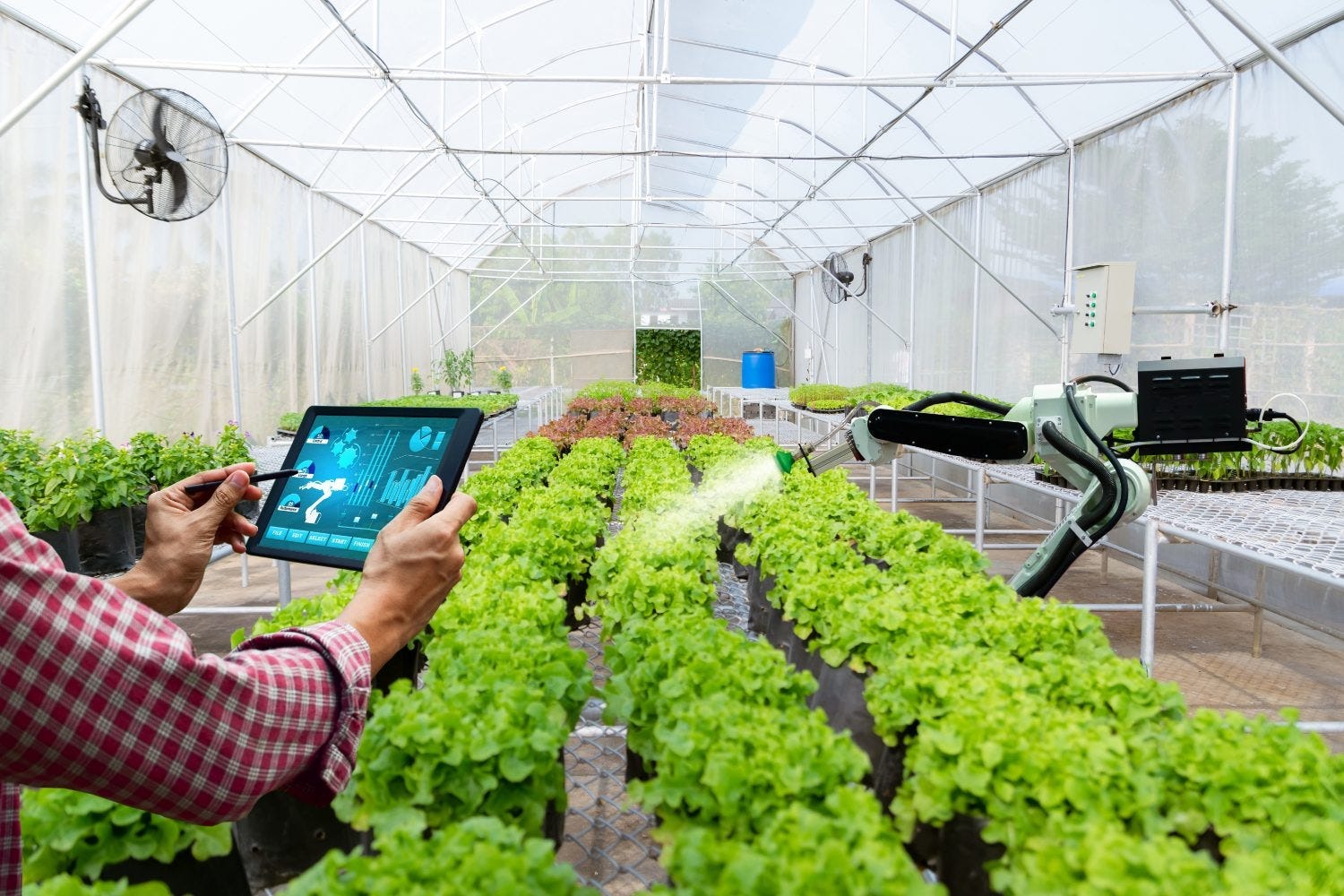
Agriculture: A Central Pillar of India’s Economy
Agriculture plays a crucial role in India's economy, contributing significantly to its GDP and employment. As of 2023, the sector accounts for ~18% of India's GDP and employs ~45% of the country's workforce, making it the largest source of livelihood in the nation. India is the world's second-largest producer of rice and wheat, among other grains and cereals. With a record ~329 million tonnes of food grains harvested during the 2022-23 crop year, according to the Ministry of Agriculture & Farmers Welfare, India has maintained its position as a net exporter of agricultural products.
The Green Revolution of the 1960s and 1970s dramatically increased India's agricultural productivity. The introduction of high yield crop varieties (HYVs), modern farming techniques, and the use of pesticides and fertilizers all aided in boosting the sector. However, challenges persist. Small and fragmented landholdings, with an average farm size of just 1.08 hectares, pose efficiency challenges. Additionally, over 50% of Indian agriculture remains rain-dependent, making the industry seasonal and vulnerable to climate change and its impacts.
To address these issues, the Indian government has implemented various initiatives. The Pradhan Mantri Fasal Bima Yojana (PMFBY), a crop insurance scheme, has enrolled over 37 million farmers. The government has also focused on doubling farmers' incomes through initiatives like e-NAM (National Agriculture Market), a pan-India electronic trading portal. The Digital Agriculture Mission 2021-2025 aims to integrate emerging technologies like artificial intelligence, blockchain, and remote sensing to enhance agricultural productivity and sustainability.
Innovations in Agritech are also playing a pivotal role in transforming Indian agriculture. For instance, drone technology is increasingly being used for crop management. Companies like Garuda Aerospace deploy drones equipped with advanced sensors and imaging capabilities to monitor crop health, assess irrigation needs, and apply pesticides with precision, making large-scale farming more efficient and sustainable. Blockchain technology is also being utilised to enhance supply chain transparency and traceability. Agri-tech startups like Agri10x use blockchain to create a decentralised and secure system with immutable records of a crop’s journey from farm to fork, thus ensuring authenticity, efficient supply chain transparency, reducing food fraud, and improving consumer trust.
These innovations have significant potential for application in Africa, where similar agricultural challenges exist. Drones can address labour shortages and inefficient resource use, while blockchain can solve issues related to traceability and fair pricing in fragmented agricultural markets. Adopting these technologies could significantly boost productivity, ensure food security, and improve the livelihoods of African farmers.
Despite progress, the sector faces challenges such as water scarcity, soil degradation, and post-harvest losses. Addressing these issues will be crucial for ensuring food security and improving the livelihood of the ~150 million people employed in the sector. As India strives to balance economic growth with environmental sustainability, the agriculture sector will continue to play a pivotal role in shaping the nation's future.
Insights in Africa’s Energy Sector
Agriculture is a cornerstone of Africa's economy, playing a crucial role in food security, employment, and economic growth across the continent. The sector accounts for ~ 30-40% of Africa's GDP and employs more than 60% of its labor force, making it the largest source of income for the continent's rural population.
Africa possesses vast agricultural potential, with about 60% of the world's uncultivated arable land. However, the industry faces significant challenges, currently producing only ~10% of global agricultural output. Only 6% of cultivated land in Africa is irrigated, compared to 14% in Latin America and 37% in Asia. Low productivity is a major issue, with cereal yields averaging around 1.5 tons per hectare, compared to the global average of about 4 tons per hectare. Limited use of improved seeds, fertilizers, and irrigation contributes to this productivity gap.
Climate change also poses a significant threat to African agriculture. The Intergovernmental Panel on Climate Change (IPCC) predicts that climate change could cause crop yields in some African countries to fall by up to 50% by 2050, exacerbating food insecurity.
To address these challenges, various initiatives have been launched. The Comprehensive Africa Agriculture Development Programme (CAADP), established in 2003, aims to eliminate hunger and reduce poverty through agriculture. Many countries have also increased their focus on agricultural research and development. Digital solutions like mobile apps for weather forecasting and market information are becoming more prevalent. The African Continental Free Trade Area (AfCFTA) agreement, implemented in 2021, is expected to boost intra-African agricultural trade.
As Africa strives to achieve food security and economic growth, transforming its agricultural sector will be crucial. With proper investment, policy support, and technological adoption, African agriculture has the potential to not only feed the continent but also become a major player in global food production.
Highlights from the 4th India-Africa Entrepreneurship & Investment Summit
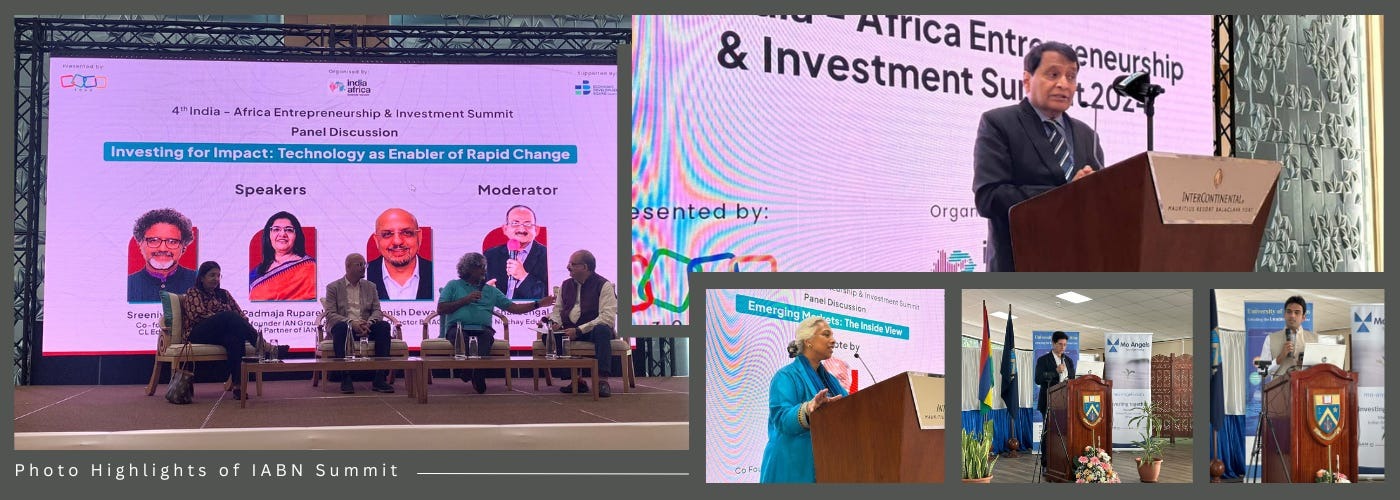
The highly anticipated 4th India-Africa Entrepreneurship and Investment Summit was recently concluded successfully, drawing over 100 key stakeholders from India and Africa over the two days.
The summit had stellar insights from eminent speakers such as Mr. Suresh Prabhu (India's Former Minister of Railways, Civil Aviation, Commerce and Industry), who delivered a keynote speech on the various key opportunities for collaboration across both regions, drawing on historical contexts and innovations from Africa that have shaped humanity. He urged attendees to explore areas such as technological expertise exchange, resource sharing, human capital development, and funding of innovative ventures and projects, all of which could benefit both regions. Mr Admassu Tadesse (President, Trade and Development Bank Africa) and Mr Ken Poonoosamy (CEO, Economic Development Board, Mauritius) spoke on the various supports and entry points for investors and entrepreneurs looking to venture into the African markets and offered to provide extensive support and information needed.
Workshops and Panel Discussions focused on bridging the innovation and funding gap across the India-Africa Corridor, ways to leverage international networks for cross-border expansion, the incorporation of ESG policies in operations, impact investing and sustainable financing. Anirudh Damani (Managing Partner, Artha Venture Fund) noted the striking similarities between the Indian and African entrepreneurial ecosystems, despite Africa. He pointed out the significant opportunities in sectors such as B2B, Spacetech, and FinTech and underscored the centrality of entrepreneurship in India. He also highlighted the longstanding relationship between India and Africa, suggesting that Africa is poised to become a thriving startup ecosystem.
A key workshop focused on unlocking early-stage capital, providing a platform for Indian and African ecosystem members to discuss non-dilutive funding, cross-border investment mechanisms, and exit strategies. Michel Cordani (Co-Founder, Mo Angels), and Kartik Sharma (Portfolio Manager, Launch Africa Ventures), emphasized the importance of transforming projects into investor-ready ventures and highlighted the necessity for visible exit strategies. Anna Ekeledo (CEO, AfriLabs) shared on Catalytic Africa, a program designed with ABAN to create a co-investment pool to encourage investment in startups of which has facilitated 20 co-investments across Africa.
One of the key ideas emerging from the summit was the “Needs and Leads'' initiative. This initiative aims to connect entrepreneurs and investors across both ecosystems, allowing them to share their challenges and needs. By facilitating this exchange, IABN seeks to streamline support, provide more tangible assistance, and enhance solutions within both regions. Do ensure you join IABN to benefit from the sessions.
Prem Anand Velumani, Associate Director of Strategic Growth at Zoho Corporation, one of the summit's sponsors, highlighted the summit’s unique role in fostering high-caliber conversations across both regions. He emphasized Zoho’s philosophy of ‘transnational localism,’ which involves establishing deep community roots while maintaining global connectivity.
Get to Know the Regions:
- Tanzania
Tanzania is a country located in East Africa and boasts of a diverse and steadily growing economy. Agriculture remains its backbone, employing about 65% of the workforce and contributing nearly 25% to the GDP. Major crops include coffee, tea, cotton, cashew nuts, tobacco, and sisal, with substantial exports bolstering foreign exchange earnings.
Mining is another pivotal sector, with Tanzania being one of Africa’s largest gold producers. The country is also rich in gemstones, particularly tanzanite, which is found only in Tanzania. The mining industry attracts significant foreign investment, contributing to government revenue and infrastructural development.
Manufacturing in Tanzania is evolving, focusing on agro-processing, textiles, and leather products. Despite challenges like power shortages and limited access to advanced technology, the sector shows promise in adding value to raw agricultural products and creating employment.
The service sector, particularly tourism, plays a crucial role. Tanzania's rich natural heritage, including iconic destinations like Mount Kilimanjaro, Serengeti National Park, and Zanzibar, attracts millions of tourists annually, contributing significantly to GDP and creating jobs.
Tanzania is also developing its energy sector, with natural gas discoveries providing potential for economic transformation. Investments in infrastructure, particularly roads, ports, and railways, are crucial to improving trade and integration within the East African Community.
Despite these positive developments, Tanzania faces challenges such as poverty, unemployment, and infrastructure deficits. However, with continued investment, policy reforms, and sustainable practices, Tanzania is poised for robust economic growth, leveraging its natural resources and strategic location to enhance its regional and global economic standing.
- Haryana
Haryana is a northern Indian state and is a significant contributor to the country's economy, characterized by its dynamic mix of agriculture, industry, and services. Agriculture remains a critical sector, with the state being one of India's leading producers of wheat and rice. The Green Revolution profoundly impacted Haryana, making it a vital grain supplier to the nation's food security.
Haryana’s industrial sector is robust, particularly in the automobile manufacturing industry. The state is home to major automobile manufacturers and numerous ancillary units, earning it the moniker “Detroit of India.” This sector not only drives economic growth but also provides substantial employment opportunities.
The Information Technology (IT) and software industry is another pillar of Haryana’s economy, especially in cities like Gurgaon, which have emerged as major IT hubs. The presence of numerous multinational corporations and IT firms has spurred the growth of related sectors such as real estate, hospitality, and retail, contributing significantly to the state's GDP.
Haryana also boasts a thriving textiles industry, with a strong presence in garment manufacturing and exports. The state’s strategic location, with proximity to the national capital, Delhi, enhances its trade and logistics capabilities, fostering an environment conducive to business growth.
The service sector in Haryana is expanding, with significant contributions from retail, banking, and financial services. The state’s proactive industrial policies, infrastructural development, and emphasis on ease of doing business have attracted considerable domestic and foreign investments.
While Haryana’s economy is diverse and growing, it faces challenges such as ensuring sustainable development and addressing regional disparities. A continued focus on infrastructure, skill development, and innovation will be crucial for Haryana's ability to maintain its economic momentum and enhance its contribution to the national economy.
Opportunity Highlights
- Innovate Africa sets to back early stage entrepreneurs with $2.5M Fund
The Innovate Africa Fund, co-founded by Kristin Wilson and Christian Idiodi, has launched with a $2.5 million investment to support early-stage startups across Africa. Aiming to nurture up to 20 African startups in its first year, the fund focuses on tackling challenges like insecurity and unemployment through technology. The investment will not just provide financial support but also strategic partnerships and mentorship, helping startups move from MVP to market fit. The fund emphasizes comprehensive support, including advisory services and product development through its Product Leadership Accelerator. Apply here.
- Applications are now open for Jasiri Talent Investor Program Cohort 7
The Jasiri Talent Investor program has opened applications for its 7th cohort, targeting entrepreneurs from Ethiopia, Kenya, and Rwanda. The program focuses on nurturing ambitious individuals to create impactful businesses with a comprehensive support system from idea development to venture launch. The fully-funded 13-months program would provide training, mentorship, and financial support to develop market-creating innovations. Key stages include team formation, customer discovery, and venture creation. The application deadline is October 17, 2024. Apply here.
Business Spotlight
- Thrive Agric: Thrive Agric is a Nigerian agritech company focused on revolutionizing the agricultural sector in Africa by connecting smallholder farmers with investors to improve productivity and income through technology. Thrive Agric provides farmers with access to funding, high-quality inputs, and training, while offering investors the opportunity to support agricultural projects and earn returns. The company's platform aims to enhance the efficiency of farming practices, boost yields, and promote sustainable agriculture by leveraging data and innovative solutions.
- Eeki Foods: Eeki Foods is an Indian agritech startup dedicated to making farming more sustainable and climate-resilient. The company employs a controlled environment agriculture (CEA) system using advanced growing chambers to create optimal conditions for year-round vegetable production unaffected by seasonal changes. Their technology involves hydroponics and vertical farming techniques, which enable them to produce high-quality crops with minimal environmental impact and reduced resource use. Eeki Foods aims to enhance food security and supply chain efficiency by growing produce closer to urban centers, thereby reducing transportation costs and spoilage. Their approach supports local food production and promotes sustainable agricultural practices.
Did you know?
- Did you know that Ethiopia, located in the Horn of Africa, is considered one of the oldest sites of human existence, with archaeological finds dating back millions of years.?
- Did you know that India is the world's largest producer of pulses, also known as legumes, which include lentils, chickpeas, and beans? Pulses play a crucial role in Indian diets and agriculture, providing essential protein and nutrients.
Don’t forget to:
- Share your story: Are you an entrepreneur with an important milestone or innovation to share? Reply to this newsletter, and we might feature your story in the newsletter or on our social media.
- Spread the Word: Did you enjoy this newsletter and know others who would too? Forward this issue via email or share it on social media. If you've been forwarded this newsletter, subscribe here.