
Jul 9, 2024

Global Healthcare Insights
According to the World Health Organization (WHO), global healthcare expenditure was reported to be approximately $10.5 trillion in 2023, accounting for about 10.3% of the global GDP. However, disparities remain in healthcare services, with high-income countries spending around $5,000 per capita on health with various advanced healthcare systems compared to low-income countries, which spend only $41 per capita with limited health care infrastructures. This disparity underscores the critical role of healthcare in fostering economic stability and enhancing the quality of life globally.
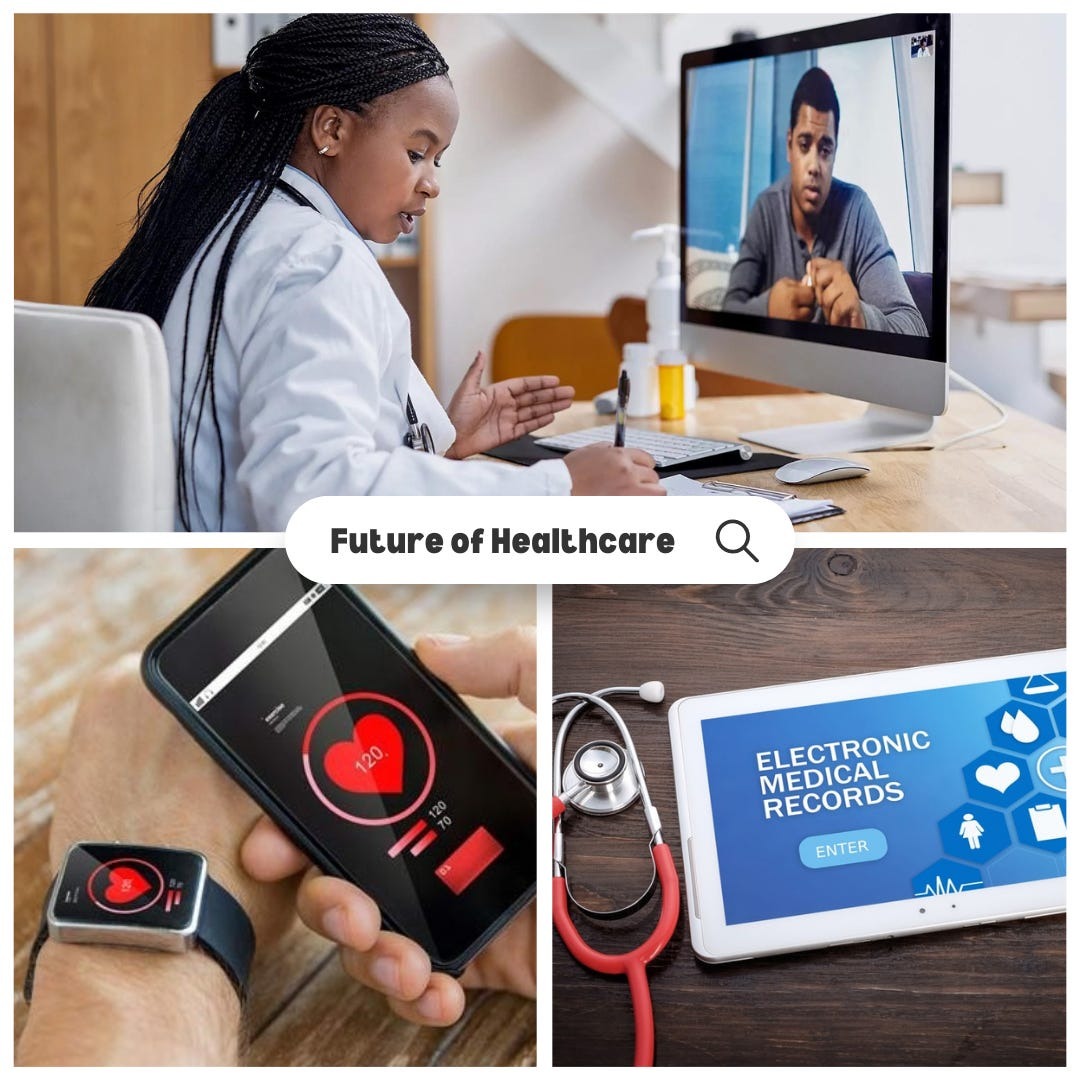
Global healthcare is experiencing a period of unprecedented growth and transformation, driven by various technological advancements, demographic shifts, and evolving patient needs. Key trends poised to shape the future of healthcare delivery include:
- Telemedicine:
Telemedicine is becoming a cornerstone of modern healthcare. The global telemedicine market, valued at over $79 billion, is projected to grow at a CAGR of 18%, reaching approximately $287 billion by 2030. Telemedicine revolutionizes healthcare delivery by expanding access to healthcare in remote and urban areas through remote consultations, thus reducing the pressure on healthcare facilities. - Artificial Intelligence (AI) and Machine Learning (ML): AI and ML technologies are set to revolutionize diagnostics, predictive analytics, and personalized medicine. Reports indicate that AI algorithms have improved diagnostic accuracy, achieving over 90% accuracy in diagnosing various types of cancer from medical images. These technologies enhance the accuracy and efficiency of diagnosis and help detect patterns and predict patient outcomes.
- Wearable Technologies:
Wearable health devices, such as smartwatches and fitness trackers, enable continuous health monitoring and proactive health management. The global wearable medical device market is expected to reach $29.1 billion by 2026, reflecting growing consumer interest and making it a promising area for innovation and investment. These devices track vital signs, physical activity, and sleep patterns, providing valuable data for individuals and healthcare providers. - Digital Health Records: The adoption of electronic health records (EHRs) has revolutionized patient information management, facilitating better coordination of care, reducing medical errors, and improving patient outcomes. EHR systems are becoming more sophisticated, integrating with other digital health tools to provide comprehensive patient data. In the United States, over 85% of hospitals have adopted EHR systems, significantly improving healthcare delivery. There is a growing market for more sophisticated EHR systems that integrate with various digital health tools, especially in African nations.
India: A Healthcare Powerhouse
India's healthcare sector has become one of the largest in terms of revenue and employment. According to Bain & Company, the healthcare sector was valued at approximately $180 billion in FY 2023 and is projected to grow to $320 billion by FY 2028, with a CAGR of 16.28%. This growth is driven by rising income levels, an expanding middle class, and heightened health awareness. India is a global leader in the pharmaceutical industry, supplying over 50% of global demand for vaccines, 40% of generic drug demand in the United States, and 25% of all medicines in the UK.
Key segments driving innovation in India's healthcare sector include pharmaceutical services, health-tech, vaccines, biotech, and med-tech with pharmaceutical services dominating due to a strong focus on exports. Health-tech accounts for 25% of the innovation market and includes, telemedicine, e-pharmacy, e-diagnostics, wellness apps, and SaaS-based enterprise solutions. Vaccines and biotech are rapidly growing segments, while med-tech offers substantial growth potential with innovations in medical devices and diagnostic tools.
India is also a leader in digital health innovations, with initiatives that aims to create a national digital-powered health ecosystem by leveraging technology for service delivery. Telemedicine has gained substantial traction, with platforms like Practo and 1mg offering virtual consultations, medicine delivery, and diagnostic services. Investment trends in India are shifting, with a greater focus on positive unit of economics in health-tech, increased interest in med-tech and biotech, and an emphasis on the consumerization of health and reconfiguration of global healthcare value chains.
India's healthcare sector presents vast opportunities for growth and investment, supported by advancements in pharma services, health-tech, biotech, and med-tech. The sector's rapid evolution and the supportive regulatory environment make it a lucrative market for domestic and international stakeholders.
Transforming Africa’s Healthcare

We spoke with Adrienne Leussa, a biotech professional and founder of Sanilux Pty Ltd, a consulting firm that supports life sciences companies in accelerating their growth. Adrienne shared valuable insights into the systemic barriers that need to be addressed to transform Africa's healthcare, the role of digital health technologies, and the potential of cross-regional collaborations in enhancing healthcare research and development.
Adrienne identified critical systemic barriers such as inadequate infrastructure, limited access to quality healthcare, and insufficient funding. Overcoming these challenges requires collaboration among governments, the private sector, NGOs, and international bodies. Key strategies include investing in infrastructure, enhancing workforce training, increasing funding, and promoting public-private partnerships. Policy reforms, community engagement, and political stability are essential for sustained progress. Additionally, developing a robust supply chain system to prevent medication and equipment shortages, expanding insurance coverage to reduce out-of-pocket expenses, and fostering innovation through technology and research are crucial steps.
Digital health technologies play a crucial role in bridging the urban-rural healthcare gap by improving access to medical services, enhancing disease monitoring, and facilitating remote consultations. Strategies could include deploying telemedicine platforms, creating mobile health apps, and maintaining digital health records. A crucial aspect is ensuring data privacy and security, as well as tailoring solutions to fit the specific context of a community through community engagement, avoiding one-size-fits-all models.
Speaking on cross-border collaboration, Adrienne emphasized the importance of knowledge exchange, resource sharing, and innovation. She highlighted promising areas where India could collaborate with African countries and vice versa, including diagnostics, vaccine manufacturing, clinical and contract research, active pharmaceutical ingredients (APIs), generics, and telemedicine, particularly for infectious diseases and maternal and child health. Leveraging India’s pharmaceutical expertise, as it is currently the third largest pharmaceutical exporter globally by volume, averaging $3 billion in monthly exports and producing over 60,000 generic drugs across 60 therapeutic categories, can significantly address many of Africa’s healthcare challenges by creating affordable healthcare solutions and enhancing pharmaceutical manufacturing.
Innovative financing mechanisms are needed to support healthcare initiatives, including blended finance models, health impact bonds, and public-private partnerships. These mechanisms reduce investment risks, attract private capital, and require diverse stakeholder contributions and an enabling environment to ensure transparency. For example, health impact bonds were used in the USA in 2013 through the collaboration of Social Finance USA and Collective Health. The bond focused on improving maternal and newborn health outcomes by reducing preterm births and low birth weights, demonstrating significant improvements in health service delivery.
Get to Know the Regions:
- Karnataka
Karnataka is located in southwestern India, and covers a diverse landscape encompassing coastal plains of the Arabian Sea, the Western Ghats mountain range, and the Deccan Plateau. The state is renowned for its rich cultural heritage and significant contributions to India's economy. The state's capital “Bengaluru”, is referred to as the Silicon Valley of India, as it serves as a global IT hub and home to numerous tech companies, multinationals and research institutions.
Karnataka is a leader in biotechnology research with dedicated parks and institutions. It plays a pivotal role in space research and satellite technology, serving as a major hub for aerospace and defense manufacturing and research, including ISRO (Indian Space Research Organisation) and HAL (Hindustan Aeronautics Limited).
- Nigeria
Nigeria, located in West Africa and is Africa's most populous country, with over 200 million people. Abuja is the nation’s capital, while Lagos stands as the largest city and one of the largest in sub-Saharan Africa, boasting of a rich cultural heritage with over 200 ethnic groups and a landscape filled with coastal plains, savannahs, and rainforest.
Nigeria’s economy is primarily driven by the petroleum industry, natural resources like natural gas and minerals. Agriculture remains a vital sector in the nation as Nigeria stands as one of the leading producer of cocoa, palm oil, cassava and yams. Lagos is the nation’s economic hub and is often referred to as Africa’s Silicon Valley, boasting of a center of technology and innovation birthing various Unicorns such as Flutterwave, Interswitch and houses various multinationals.
News & Views
- India ranks 63rd on Energy Transition Index
India ranks 63rd on the Global Energy Transition Index released by World Economic Forum (WEF), showing notable progress in renewable energy expansion, energy efficiency, and achieving universal electricity access. WEF praised India’s efforts in leveraging energy for income generation and supporting micro-enterprises. Despite these improvements, challenges like a carbon-intensive energy mix and rising import dependence, remain. Read more here.
- Asian & Turkish Forms are replacing western multinationals fleeing Nigeria.
As Western multinationals like Diageo, GlaxoSmithKline, Procter & Gamble and Unilever are exiting Nigeria due to economic challenges such as currency devaluation and high operational costs. In their place, Asian and Turkish companies, like Tolaram, are stepping in to fill the void, gaining market share by offering cost-effective alternatives better suited to navigate Nigeria's volatile economic landscape, providing more affordable alternatives and contributing to the local market's resilience. Read more here.
Opportunity Highlights
- Applications are now open for Ecobank Fintech Challenge
The Ecobank Fintech Challenge invites startups with innovative solutions to address financial needs in Africa. Participants can gain commercial partnerships, access to a pan-African banking sandbox, and business acceleration support. The challenge includes a $50,000 cash prize and opportunities for product rollouts across Ecobank’s 35 African markets. The program seeks to promote financial inclusion, improved customer experience, and digital banking solutions. Apply here.
- Apply for Microsoft for Startups GrowthX Accelerator Program
The Microsoft for Startups Middle East & Africa GrowthX Accelerator Program 2024 is an 8-week, equity-free accelerator designed for AI tech startups. Supported by Microsoft and the Abu Dhabi Investment Office, the program offers virtual workshops, mentorship, technical support, and access to investors and corporate partners with $150,000 in Azure credits and opportunities for scaling solutions. The program commences September 16th to November 8th, 2024 and concludes with a Demo Day. Apply here.
Startup Spotlight
- Zuri Health: Zuri Health is a Kenyan health-tech startup, leveraging technology to revolutionize healthcare in Africa. Their platform, Zuri Doctor, offers comprehensive telemedicine services, enabling remote consultations via video, chat, and voice calls which has been crucial in providing medical assistance to those in remote or underserved areas. The platform also includes teleradiology to enhance diagnostic speed and accuracy and partner with local pharmacies for seamless medication delivery and home lab testing services.
- Innovaccer: Innovaccer, an Indian health-tech startup, leveraging data analytics to improve healthcare outcomes. Innovaccer's solutions help healthcare providers enhance care coordination, reduce costs, and improve patient experiences by offering insights through comprehensive data analysis. Their platform integrates healthcare data from various sources, enabling better patient care and operational efficiency.
Did you know?
- Did you know that Africa holds around 30% of the earth’s remaining mineral resources, 12% of the world’s oil, and 8% of the world’s natural gas reserves?
- Did you know that India was the world's first source of diamonds, mining them from the Krishna River Delta in Andhra Pradesh from the 4th century BC for about 1000 years?
Don’t forget to:
- Register for the 4th India-Africa Entrepreneurship & Investment Summit: We are 9 days away to the Summit. This summit seeks to bridge the entrepreneurial ecosystems of India and Africa by bringing together key decision-makers, investors and entrepreneurs from the private and public sectors in both regions, fostering cross-continental investments and strategic partnerships. Register here.
- Share your story: Are you an entrepreneur with an important milestone or innovation to share? Reply to this newsletter, and we might feature your story in the newsletter or on our social media.
- Spread the Word: Did you enjoy this newsletter and know others who would too? Forward this issue via email or share it on social media. If you've been forwarded this newsletter, subscribe here.